
Why Does Skincare Need Preservatives? Understanding Cosmetic Formulations
Read More


November 10, 2026
Discover how fermented skincare ingredients differ from probiotics and postbiotics, what a Lactobacillus lysate is and how to read skincare labels with confidence.
Fermented skincare has become one of the more intriguing conversations in modern beauty.
You may have seen serums described as containing probiotics, moisturisers featuring postbiotics, or ingredient lists with names such as Lactobacillus Ferment Lysate Extract.
The language sounds scientific, and it is easy to assume these ingredients all do something similar.
But fermentation, probiotics and postbiotics are not interchangeable terms.
Each describes something different, and understanding those differences can make skincare labels much easier to navigate.
There is also an interesting scientific story behind these ingredients.
Researchers are exploring how microorganisms and materials derived from them might be used in cosmetic formulations. Some studies focus on living microorganisms, while others investigate preparations containing microbial components.
The results have encouraged further research, but the details matter.
So what exactly is fermented skincare, and how does it fit into a thoughtful everyday routine?
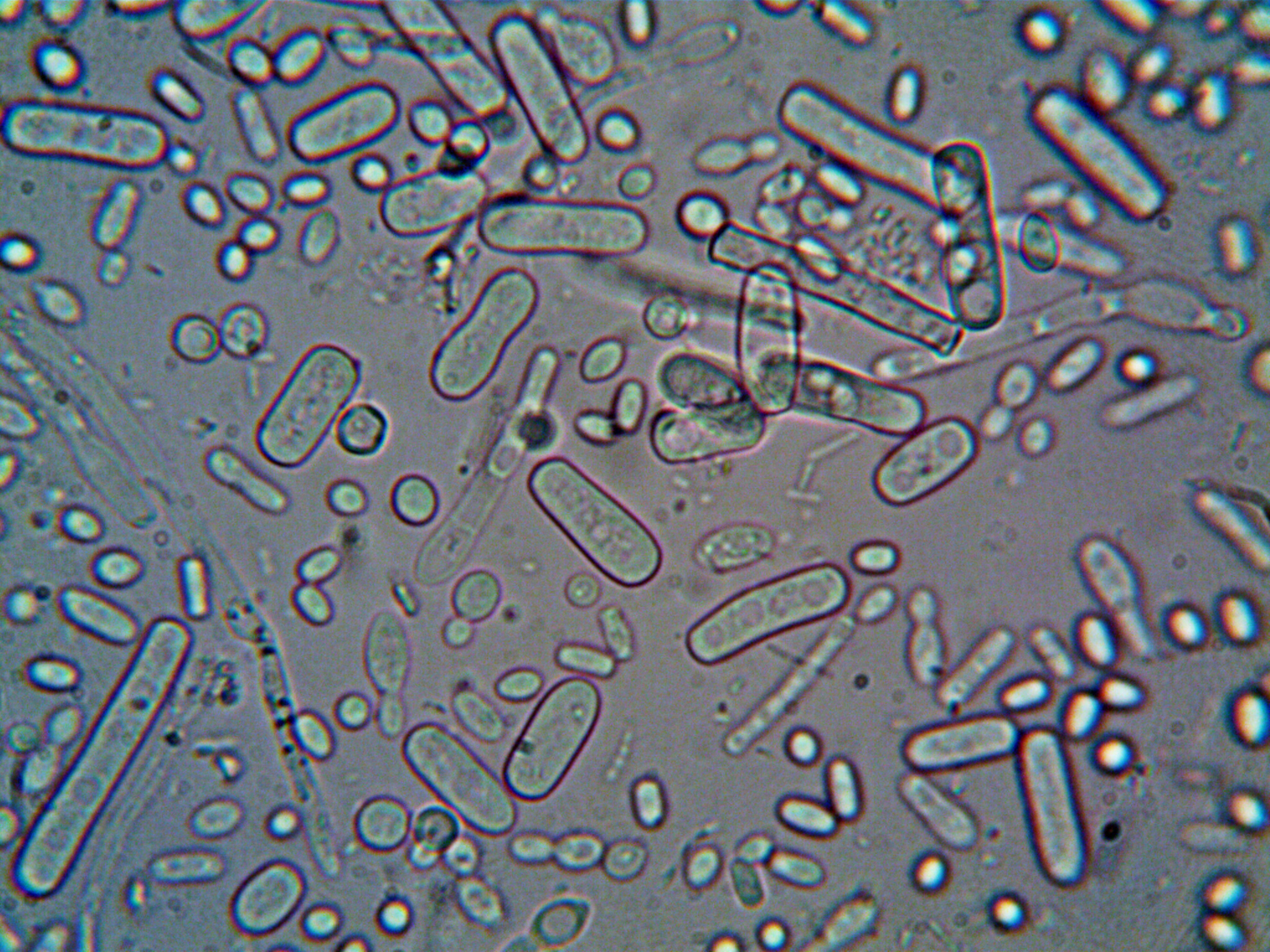
Fermentation is a biological process in which microorganisms transform substances through their metabolic activity.
You may already be familiar with fermentation through foods such as yoghurt, sourdough bread and kimchi.
In these examples, microorganisms interact with ingredients and contribute to changes in the finished food.
Cosmetic fermentation follows the same broad scientific principle, although the materials, organisms and manufacturing processes may be very different.
A skincare ingredient can be produced through fermentation, derived from a fermented material or prepared using components associated with microorganisms.
The result is not necessarily a living culture.
That distinction is important.
Fermentation offers scientists and manufacturers different ways to produce or transform materials.
Depending on the process, it may be used to obtain particular compounds, create an ingredient with specific physical properties or prepare materials for further investigation.
It is one of several technologies available to cosmetic formulators.
Its value depends on what is being produced.
A fermented ingredient is not automatically better than an unfermented ingredient, just as a botanical ingredient is not automatically more effective because it comes from a plant.
What matters is the identity of the material, its characteristics and the evidence supporting its intended use.
To understand why fermentation-derived ingredients attract attention, it helps to know a little about the skin microbiome.
Your skin is home to a diverse community of microorganisms.
These include bacteria, fungi and other microscopic organisms that live in different environments across the skin's surface.
The communities found on an oily forehead may differ from those in a drier area of the body.
That variation is normal.
The skin microbiome is influenced by factors including body location, age, environmental exposure and individual characteristics.
Researchers have spent years investigating how these microbial communities interact with the skin.
A major scientific review by Byrd and colleagues describes the diversity of microorganisms associated with human skin and their relationship with the skin's biological environment.
This is a fascinating area of research because the skin is not simply a passive surface.
It is a complex living system.
No.
The growing interest in the microbiome does not mean every skincare routine requires a specialised microbiome product.
Basic skincare principles remain valuable.
Comfortable cleansing, appropriate moisturising and daily sun protection are still sensible foundations.
A product does not need to contain a fermented ingredient to be thoughtfully formulated.
Likewise, the presence of a fermentation-derived ingredient does not establish that a product has changed the skin's microbial community.
Understanding the microbiome is useful, but it should not make everyday skincare feel unnecessarily complicated.
These two terms are often used together in skincare marketing.
Scientifically, however, they describe different things.
A probiotic is a live microorganism that meets established scientific criteria.
The important word is live.
For an ingredient or preparation to qualify as a probiotic, it is not enough for it to be associated with bacteria commonly used in probiotic products.
The microorganism must be alive, appropriately characterised and supported by evidence of a health benefit.
This is why seeing the word Lactobacillus on a skincare ingredient list does not automatically mean a product contains live probiotics.
The complete ingredient name matters.
Postbiotics are preparations containing inanimate microorganisms or their components that have demonstrated a health benefit.
Scientists developed a consensus definition to help distinguish postbiotics from probiotics and other microbial-derived materials.
This definition is more specific than simply describing something as a fermented ingredient.
A preparation containing microbial fragments is not automatically a scientifically established postbiotic.
The material must meet the relevant criteria, including evidence supporting its benefit.
For skincare consumers, this distinction is helpful.
It explains why probiotic, postbiotic and ferment should not be treated as three names for the same ingredient.
One ingredient you may encounter is Lactobacillus Ferment Lysate Extract.
The name sounds complicated, but it becomes easier to understand when separated into its parts.
Lactobacillus refers to a group of bacteria associated with fermentation.
Ferment indicates a relationship with a fermentation process.
Lysate refers to material obtained when cells are disrupted.
Extract identifies the resulting cosmetic ingredient preparation.
Together, these words describe a material derived from microbial processing rather than simply identifying a living bacterium.
No.
A lysate contains material associated with disrupted cells.
That is different from a preparation containing intact, viable microorganisms.
The distinction is important because the scientific evidence for a particular living strain cannot automatically be applied to a lysate derived from it.
Processing can change the material being studied.
Even two ingredients derived from the same broad bacterial group may differ in composition.
This is why ingredient names deserve more attention than broad marketing categories.
Scientists investigate microbial-derived materials because microorganisms contain a variety of structural components and produce many different substances.
Some preparations have been studied in relation to skin appearance, hydration and other cosmetic measures.
A review published in Nutrients examined clinical trials involving well-characterised probiotic and postbiotic preparations in cosmetic products.
The authors identified encouraging findings in selected studies.
Importantly, the research involved specific preparations.
That level of detail matters because a result associated with one bacterial strain or formulation cannot be assumed for another.
The interesting part of the science is its precision.
This is a common question, particularly when skincare marketing uses words such as gentle, soothing or microbiome-friendly.
The answer depends on the complete formulation and the individual using it.
Fermentation does not guarantee that an ingredient will be comfortable for every skin type.
Similarly, the absence of fragrance does not mean a product cannot cause irritation.
People respond differently to cosmetic products.
A formulation that feels lovely to one person may not suit another.
If your skin tends to feel uncomfortable, it is worth considering the entire ingredient list rather than focusing on a single fermented component.
Think about the product's texture.
Consider whether it contains added fragrance.
Pay attention to how it fits alongside your existing routine.
And remember that introducing several new products at once can make it difficult to understand which one suits you.
If you are exploring fragrance-free skincare, it can help to understand the difference between products without added fragrance and those simply described as unscented.
The distinction is useful, particularly when comparing formulations marketed towards people who prefer a simpler routine.
When trying a new serum, consider using it consistently for a period without changing every other part of your routine.
Follow the product instructions.
If you have a history of reactions, consider testing a small area first.
Stop using a product if it causes significant or persistent irritation, and seek professional advice when needed.
A thoughtful routine should feel manageable.
There is no need to introduce an ingredient simply because it has become popular.
Not at all.
Fermentation-derived materials and familiar moisturising ingredients can play different roles within a formulation.
Glycerin, for example, is an established humectant.
It is widely used because of its ability to attract and retain water.
Sodium Hyaluronate is another familiar ingredient in hydration-focused skincare.
These ingredients have substantial scientific histories.
Their presence alongside a fermentation-derived ingredient does not make them less important.
In fact, understanding their different roles can help explain why cosmetic formulation is more interesting than simply choosing one celebrated ingredient.
A serum may contain ingredients selected for hydration, texture, stability and other formulation characteristics.
The way these components are combined influences the finished product.
Two serums may both contain a Lactobacillus-derived ingredient and still feel entirely different.
One might be lightweight and fluid.
Another might have a more substantial texture.
The experience depends on the whole formula.
This is also why ingredient percentages, when disclosed, need context.
A higher percentage of one ingredient does not automatically establish that a product is better.
Its identity, preparation and role within the formulation all matter.
You do not need to create an elaborate skincare ritual to enjoy a serum.
A few considered steps can be enough.
Begin with a cleanser appropriate for your skin and the products you have used throughout the day.
Apply your serum according to its instructions.
Follow with a moisturiser if you prefer a richer layer of comfort.
During the day, use appropriate sun protection.
The exact routine can be adjusted to your preferences.
Sometimes the most useful question is not which ingredient is newest.
It is how you want your skin to feel.
Perhaps you prefer a lightweight serum in the morning.
Perhaps you enjoy a more substantial moisturiser at night.
Or perhaps your preferences change with the weather.
Understanding the difference between dry skin and dehydrated skin can help you make more considered choices about moisturising textures and routine steps.
These everyday observations often matter more than following an ingredient trend.
If you use both a serum and a moisturiser, a common approach is to apply the lighter product first.
But the instructions for the actual products should guide you.
Allow each product to settle comfortably before adding the next.
If your routine feels heavy or products begin to roll on the skin, consider whether you are using more layers than you need.
Learning how to layer a serum and moisturiser can make a simple routine feel more enjoyable.
There is no need to use every product in your bathroom cabinet each day.
At Mi’Ora, we are interested in the relationship between established moisturising ingredients and selected materials from modern cosmetic biotechnology.
Our approach is built around thoughtful formulation and the experience of everyday care.
Hydra Bloom Hyaluronic Acid Serum is designed as a lightweight, hydration-focused step.
Its formula includes Glycerin and Sodium Hyaluronate alongside selected ingredients such as Lactobacillus Ferment Lysate Extract, Yeast Ferment Extract and Haematococcus Pluvialis Extract.
These ingredients reflect our interest in combining familiar cosmetic components with materials from different areas of ingredient research.
The Pause Moisturiser offers a richer, comforting cream experience.
Its formulation includes Glycerin, jojoba-derived ingredients, sunflower seed oil and selected botanical and microalgae-derived ingredients.
Both products are fragrance-free.
They are designed to fit naturally into a considered skincare routine.
For us, ingredient education is part of making skincare feel more approachable.
An unfamiliar name does not need to be intimidating.
Sometimes it simply opens the door to a more interesting understanding of how cosmetic products are made.
Not necessarily. Fermentation-derived cosmetic ingredients may contain materials produced or processed through fermentation without containing live microorganisms.
Its INCI name does not establish that it is a live probiotic. A lysate is different from a preparation of viable microorganisms.
No. A postbiotic must meet specific scientific criteria, including evidence of a health benefit from the defined preparation.
Yes, provided the finished products suit your skin. A formulation may contain both fermentation-derived materials and familiar hydration-focused ingredients.
No. A thoughtful routine can be built around cleansing, moisturising and sun protection without requiring specialised fermented ingredients.
Skincare science becomes more interesting when we look beyond familiar marketing terms.
Fermentation is a process.
A probiotic is a living microorganism meeting defined criteria.
A postbiotic is a specific type of preparation supported by evidence.
And a ferment lysate is a material with its own identity and scientific context.
Understanding those distinctions makes it easier to appreciate the possibilities of modern cosmetic biotechnology without expecting every ingredient to perform the same role.
Good skincare does not need to be complicated.
It can be thoughtful, enjoyable and grounded in a little curiosity.
Sometimes the most valuable part of a routine is simply taking a moment for yourself.
Pause. Breathe. Glow.
The pause your skin deserves