Why Does Skincare Need Preservatives? Understanding Cosmetic Formulations
Read More



November 23, 2025
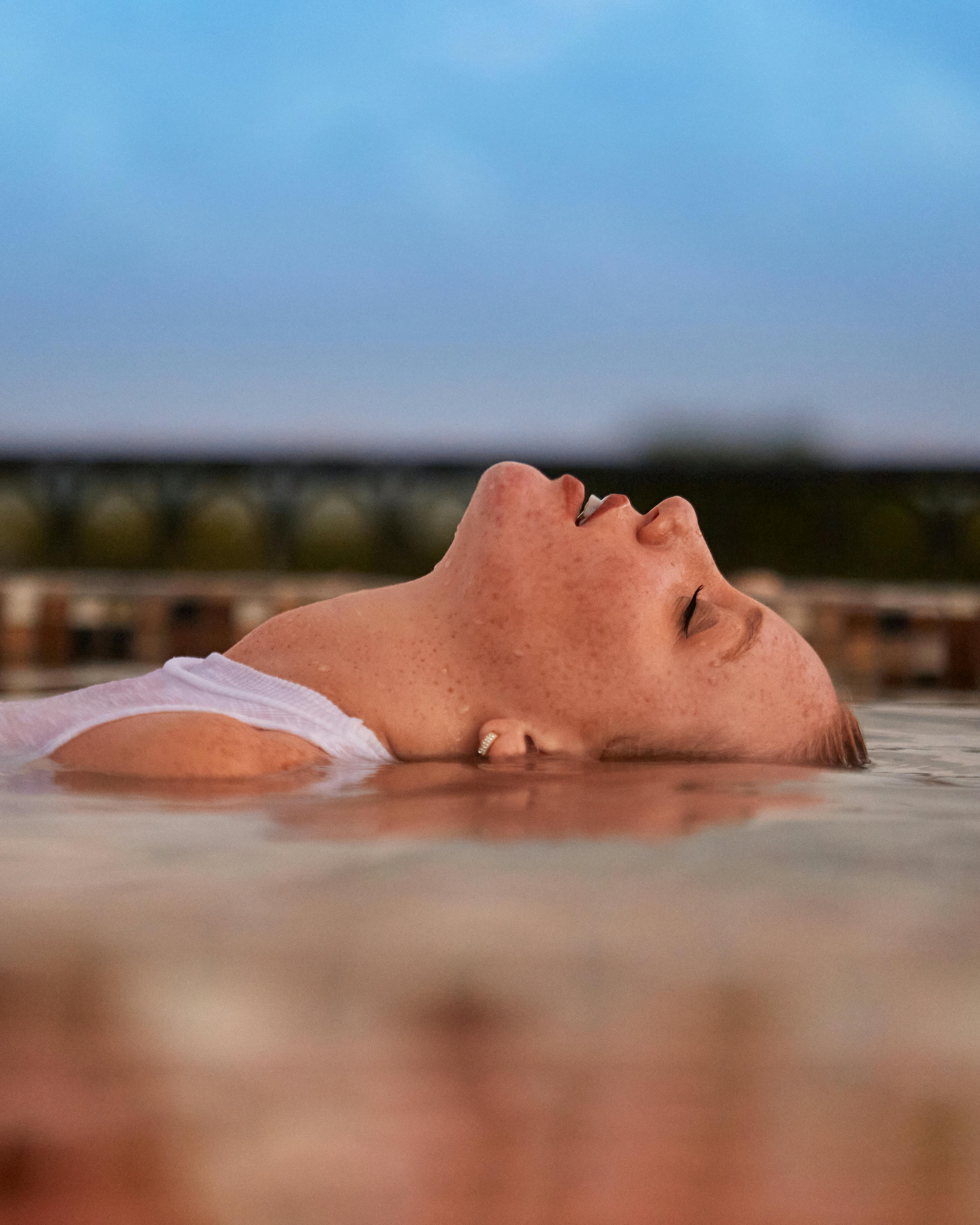
Discover how a mindful skincare ritual can become a moment of grounding. Explore the science of sensory self-care and simple ways to slow down with Mi’Ora. Copy description
Some days seem to pass without a moment of stillness.
There are messages to answer, places to be and responsibilities that quietly fill the hours. By the time evening arrives, you may realise you have spent much of the day thinking about what comes next rather than noticing where you are.
In moments like these, even the simplest familiar routines can offer an opportunity to slow down.
The warmth of water against your hands. The gentle texture of a moisturiser. The sound of water moving. The familiar feeling of taking a few minutes for yourself.
These small sensory experiences can become part of a practice known as grounding.
Grounding is about bringing your attention back to the present moment. It does not require an elaborate routine, a perfectly quiet room or any particular skincare product.
For some people, an everyday skincare ritual offers a natural opportunity to practise it.
At Mi’Ora, this idea sits at the heart of our philosophy.
We believe skincare can be more than a collection of products. It can also be a moment to pause, reconnect with your senses and enjoy caring for yourself.
Not because skincare can remove the pressures of everyday life, but because a moment of care can still feel meaningful within it.
Grounding is a term commonly used to describe techniques that help direct attention towards the present moment.
Rather than becoming absorbed in worries about the future or thoughts about the past, grounding encourages awareness of what is happening here and now.
This might involve noticing:
Grounding techniques are frequently used as practical strategies for managing moments of stress or feeling overwhelmed.
Australian mental health organisations, including Lifeline and Beyond Blue, describe exercises that use the senses to help people reconnect with their immediate surroundings.
Grounding and mindfulness are closely related, although the terms are not always interchangeable.
Mindfulness generally involves paying attention to present-moment experiences with curiosity and without unnecessary judgement.
Grounding often uses more specific sensory or physical techniques to redirect attention towards the immediate environment.
For example, mindfulness might involve noticing the thoughts passing through your mind while washing your face.
Grounding might involve deliberately focusing on the sensation of the water, the feeling of your fingertips and the sounds in the room.
Both can encourage present-moment awareness.
Neither requires you to completely empty your mind.
Not necessarily.
The term grounding is sometimes also used to describe earthing, a practice involving direct physical contact with the ground.
That is different from the sensory and attention-based grounding techniques discussed here.
In this article, grounding refers to directing your attention towards your body, senses and immediate surroundings.
It is a practical wellbeing technique rather than a claim about electrical or physiological effects from contact with the earth.
When life becomes busy, attention is often divided between several things at once.
We might be physically present in one place while mentally preparing for something entirely different.
Mindfulness encourages us to notice that movement of attention and gently return to the present.
A review published in Clinical Psychology Review examined research into mindfulness and psychological health.
The authors considered observational studies, mindfulness-based interventions and laboratory investigations.
The review identified evidence associating mindfulness practices with several aspects of psychological wellbeing, including emotional regulation and responses to stress.
However, mindfulness is not a single technique, and research findings vary according to the type of intervention, the participants and the outcomes being measured.
A structured mindfulness programme should not be treated as scientifically equivalent to briefly paying attention while applying skincare.
Still, the broader research helps explain why simple practices involving attention and awareness may feel useful to some people.
No.
Formal meditation is one way to practise mindfulness, but present-moment awareness can also be incorporated into everyday activities.
You might notice your surroundings during a walk, pay attention to the warmth of a cup of tea or focus on your breathing while sitting quietly.
The activity itself is less important than how you approach it.
You are not trying to perform the moment perfectly.
You are simply giving yourself an opportunity to notice it.
The connection between skincare and wellbeing has attracted growing scientific interest.
Researchers have begun exploring whether the experience of facial skincare may influence psychological and physiological measures associated with relaxation and emotional responses.
These investigations are interesting because they examine skincare as an experience rather than considering only changes in skin appearance.
A study published in the International Journal of Cosmetic Science investigated the wellbeing-related effects of a structured facial skincare treatment.
The researchers compared responses associated with a facial skincare experience against those recorded during a period of rest.
The skincare procedure lasted approximately one hour and included facial massage gestures and several cosmetic products.
The researchers used psychological assessments and physiological measurements, including electroencephalography, to explore participants' responses.
They reported findings suggesting that the facial skincare experience was associated with changes in certain emotional and physiological measures relevant to wellbeing.
This provides an interesting foundation for further research into the sensory experience of cosmetic care.
However, the study had specific conditions.
A professionally delivered, hour-long facial treatment is different from applying a serum or moisturiser at home.
The findings therefore do not establish that every skincare routine reduces stress, changes brain activity or produces measurable relaxation.
A 2025 scientific perspective published in Clinical, Cosmetic and Investigational Dermatology explored the relationship between skin health and broader wellbeing.
The authors discussed how skin conditions can influence quality of life, emotional wellbeing and social experiences.
This highlights an important aspect of dermatology: the experience of living with a skin concern may extend beyond its physical symptoms.
However, the article was a scientific perspective rather than a trial showing that ordinary cosmetic skincare treats psychological stress.
Taken together, this research encourages a broader appreciation of skincare without justifying exaggerated claims.
A pleasant skincare ritual may contribute to someone's sense of everyday wellbeing.
That does not mean it should be presented as medical or psychological treatment.
Much of the pleasure of skincare comes from the sensory experience.
We notice how a product looks, how it moves across the skin and how it feels during application.
These details can turn an ordinary activity into something more intentional.
For grounding, sensory experiences can also provide a focus for attention.
Touch is one of the most immediate parts of applying skincare.
The texture of a lightweight serum may feel different from that of a richer moisturiser.
A cream may spread smoothly, while another formulation leaves a more cushioned sensation.
These differences are influenced by the ingredients and structure of the formulation.
When practising grounding, you might choose to notice the sensation rather than rushing through the application.
Pay attention to the temperature of the product, its texture and the feeling of your fingertips.
There is no need to massage vigorously or apply unnecessary pressure.
A gentle, comfortable application is enough.
Sound can become another part of a sensory ritual.
Some people enjoy the sound of running water, a soft breeze or the movement of the ocean.
Others prefer a quiet room.
The important element is personal preference.
A familiar, enjoyable sound may make it easier to pay attention to the moment.
For Mi’Ora, the ocean represents a particularly meaningful connection.
The movement of water, the gentle rhythm of waves and the feeling of open space reflect the atmosphere we want to evoke through our brand.
These sounds can provide a sensory backdrop to a skincare ritual.
They do not need to be described as scientifically proven treatments to be appreciated.
Visual surroundings can also influence how an experience feels.
A softly lit bathroom, a clean surface or the natural colours of a product may contribute to a sense of order and familiarity.
For some people, reducing visual clutter makes an everyday routine more enjoyable.
For others, the simple act of watching water move across their hands may be enough to bring their attention back to the present.
Mindful skincare does not require an elaborate setting.
It can begin with noticing something ordinary.
Fragrance has traditionally played an important role in the sensory experience of beauty products.
However, scent is not the only way to create a pleasing skincare ritual.
At Mi’Ora, we have chosen to formulate without added fragrance and essential oils.
This reflects our approach to ingredient selection and our interest in creating a sensory experience through other qualities.
Texture, touch, sight and sound can all contribute.
A fragrance-free product may still have a subtle natural odour from its raw materials, but an added perfume does not need to define the experience.
For us, this opens the possibility of a quieter kind of luxury.
One in which the ritual is shaped by how the product feels and the moment surrounding its use.
Yes. An everyday activity can provide an opportunity to practise grounding when attention is deliberately directed towards the experience.
The skincare products themselves do not need to have special psychological properties.
Instead, the practice involves how you engage with the routine.
Choose a routine that already feels comfortable.
Perhaps you cleanse your face in the evening and apply a moisturiser afterwards.
There is no need to introduce several new products or turn a simple ritual into a complicated sequence.
A familiar routine can be a useful place to begin because you already know the steps.
As you wash your face, notice the temperature of the water.
As you apply your moisturiser, pay attention to the sensation of the product spreading across your skin.
If your thoughts move towards tomorrow's responsibilities, gently return your attention to what your hands are doing.
There is no need to judge yourself for becoming distracted.
That movement of attention is part of the practice.
Some evenings will feel peaceful.
Others may feel rushed, noisy or interrupted.
A mindful skincare ritual does not have to happen in ideal circumstances to feel worthwhile.
You can practise grounding for a few moments and continue with your day.
The purpose is not to achieve a perfect state of calm.
It is to create a little space for awareness when it feels useful.
You do not need a lengthy routine to explore mindful skincare.
The following is a suggested sensory exercise inspired by grounding techniques.
It is not a clinically tested skincare protocol, and its two-minute duration is simply a practical choice.
Before beginning, notice how you are standing or sitting.
Feel the surface beneath your feet.
Allow your shoulders to rest in a comfortable position.
There is nothing specific you need to achieve.
Simply notice where you are.
If cleansing is part of your normal routine, pay attention to the sensation of the water.
Notice its temperature and the movement of your hands.
Listen to the sound of the tap.
Use a cleanser appropriate for your skin and avoid unnecessary rubbing.
You do not need to spend longer cleansing than your skin requires.
Apply your familiar serum or moisturiser according to its directions.
As you do, notice the texture between your fingertips.
Pay attention to how it spreads.
Does it feel lightweight, creamy or softly cushioning?
Allow the sensation itself to hold your attention for a moment.
If it feels natural, take a few slow, comfortable breaths.
You do not need to hold your breath or follow a strict pattern.
Simply notice the movement of breathing.
If focusing on your breath feels uncomfortable, use another sensory anchor instead, such as the feeling of your feet against the floor or the sound of water nearby.
When you finish, notice how you feel without expecting a particular result.
Perhaps the moment felt calming.
Perhaps it simply gave you an opportunity to pay attention to something familiar.
Both experiences are valid.
The ritual is complete when you decide it is.
Psychological stress can influence several aspects of physical and emotional wellbeing.
Research also suggests that stress-related biological processes may interact with skin function under certain circumstances.
However, the relationship between psychological stress and the skin is complex.
Stress does not automatically cause barrier damage, and skincare cannot eliminate the biological or psychological effects of a difficult period.
A moisturiser can contribute to skin hydration and comfort within an appropriate formulation.
A familiar routine may also feel enjoyable or reassuring.
These are different benefits.
It would be inaccurate to suggest that applying a cosmetic product directly regulates cortisol, repairs the nervous system or treats anxiety.
For people experiencing ongoing stress, evidence-based wellbeing practices and appropriate professional support remain important.
Mindful skincare can be a personal ritual alongside these broader approaches.
It should not replace them.
For more information about the relationship between stress and skin physiology, explore our article on how stress affects your skin and skin barrier.
There is a difference between caring for your skin and feeling that you must constantly improve it.
Skincare trends can create pressure to introduce new products, follow increasingly elaborate routines or respond to every small change in appearance.
For some people, this can make skincare feel more like another responsibility than a moment of care.
A more considered approach begins by asking what your skin actually needs.
Different cosmetic ingredients have different functions.
Some support hydration.
Others influence texture or address particular cosmetic concerns.
More products do not automatically mean better results.
A routine should be appropriate for your skin and comfortable enough to maintain.
Simple skincare may involve cleansing, moisturising and appropriate sun protection, with additional treatments selected according to individual needs.
For someone using prescribed dermatological treatments, those directions should continue to guide the routine.
Mindfulness should not require abandoning evidence-based skincare.
It simply offers another way of approaching the experience.
If a skincare routine becomes too demanding, there is little value in insisting that every step must be performed perfectly.
Some days, a brief familiar routine may feel sufficient.
There is no need to introduce an elaborate ritual simply because it appears relaxing online.
Our guide to a gentle reset for an overcomplicated skincare routine explores the value of taking a more considered approach to skincare.
There is something distinctive about time spent near the ocean.
The repetition of waves, the movement of light across water and the sense of open space can create a familiar atmosphere.
For many people, these experiences feel peaceful or restorative.
At Mi’Ora, the ocean is an important source of inspiration.
It shapes our interest in marine biotechnology and the visual and sensory world we want to create around the brand.
But its influence extends beyond ingredient selection.
It also informs how we think about the experience of skincare.
Water is central to many skincare experiences.
From cleansing to the comfortable feeling of a hydrating formulation, it is woven into our everyday routines.
For Mi’Ora, the idea of water also carries a quieter meaning.
Movement without urgency.
A natural rhythm.
A moment of stillness within something constantly changing.
These associations are part of our brand philosophy rather than clinical claims.
We do not need to suggest that an ocean-inspired skincare product changes brain activity or treats stress to appreciate the feeling it can evoke.
Our preference for fragrance-free formulations is part of the Mi’Ora identity.
It encourages us to consider sensory pleasure beyond perfume.
The softness of a texture.
The visual simplicity of a formulation.
The sensation of application.
The gentle sound of water nearby.
These elements can contribute to a skincare experience that feels intentional without being overwhelming.
For us, this is what makes the ritual meaningful.
We do not believe a skincare ritual needs to be long, elaborate or perfectly organised.
It can be a few familiar steps before the day begins.
A gentle routine after coming home.
Or a moment in the evening when the rest of the world feels a little quieter.
Our intention is to create skincare that belongs naturally within those moments.
Not because a product can guarantee relaxation, but because a thoughtful experience can make everyday care something to enjoy.
There is no single correct way to turn skincare into a grounding ritual.
The most useful approach is one that feels personal.
You might prefer a quiet morning routine with natural light coming through the window.
You might enjoy cleansing your face after a long day and listening to the sound of running water.
Or perhaps your evening moisturiser is simply an opportunity to stop looking at a screen for a few minutes.
Whatever the setting, consider a few gentle principles.
Notice what you can see, hear and feel.
There is no need to engage every sense at once.
Choose one that feels comfortable and let it become your focus.
Use products that suit your skin and follow their directions.
A grounding ritual does not require introducing new skincare simply for the experience.
Your moment may be interrupted.
The room may not be quiet.
You may have other things to do.
None of this means the ritual has failed.
Grounding is about returning to the present, even when the present is imperfect.
You might take three comfortable breaths, listen to a familiar sound or simply notice the texture of your moisturiser.
The important part is that the experience feels chosen rather than compulsory.
At Mi’Ora, we believe these small moments deserve a place in everyday life.
Not because they promise transformation, but because they offer an opportunity to pause.
Grounding in skincare refers to using familiar skincare activities as opportunities for present-moment awareness. This might involve focusing on the sensation of water, the texture of a moisturiser or the movement of your hands. It is a personal wellbeing practice rather than a specific cosmetic treatment.
Some people find their skincare routines calming or enjoyable. Research has explored psychological and physiological responses to structured facial skincare experiences, but this does not establish that everyday cosmetic application treats stress or anxiety. Skincare should not replace appropriate mental health support.
A mindful skincare routine involves paying attention to the experience of cleansing, moisturising or applying other products. The focus is on awareness of sensations and the present moment rather than rushing through the steps.
There is no established ideal duration. A few moments of sensory attention may be a practical starting point. The two-minute exercise described in this article is a suggestion, not a clinically validated treatment.
Some studies have investigated psychological and physiological responses to structured facial treatments involving massage. However, findings from professional treatments cannot automatically be generalised to brief facial massage at home. Avoid vigorous pressure, particularly if your skin is irritated or sensitive.
Mindfulness practices have been studied for aspects of psychological wellbeing. However, there is insufficient evidence to claim that practising mindfulness during skincare directly repairs the skin barrier. Barrier-related cosmetic benefits depend on factors including the formulation used and the individual's skin condition.
No. A skincare product's sensory experience can come from its texture, spreadability, appearance and the setting in which it is used. Added fragrance is not a requirement for a comfortable or enjoyable cosmetic formulation.
Not every technique works for everyone, and there is no need to force a particular response. Some people find breath-focused exercises uncomfortable or distracting. You may prefer paying attention to sounds, touch or another familiar sensation. If ongoing stress or anxiety is affecting daily life, consider seeking professional support.
There is no shortage of things asking for our attention.
Our days move between conversations, responsibilities and an endless stream of information.
Sometimes, the simplest activities give us an opportunity to notice something different.
The feeling of warm water.
The texture of a familiar cream.
A quiet sound in the background.
The sensation of taking a comfortable breath.
These moments do not need to be extraordinary.
They do not need to promise dramatic results or become another item on a list.
For Mi’Ora, skincare is an opportunity to bring a little more intention to something we already do.
Our interest in thoughtful formulations is accompanied by a belief that the experience of using skincare matters too.
Not just how a product looks on the shelf or feels on the skin, but how it fits into the rhythm of everyday life.
A ritual can be simple.
It can be personal.
And it can belong to you, exactly as you are, in the middle of an ordinary day.
Sometimes, taking a moment for yourself is enough.
Pause. Breathe. Glow.
The pause your skin deserves