
Why Does Skincare Need Preservatives? Understanding Cosmetic Formulations
Read More


November 8, 2026
Discover what sea kale extract is, why it appears in modern skincare and how research into this coastal botanical explores skin comfort and moisturising care.
There is something quietly fascinating about the ingredients we find in skincare.
Some are familiar enough to recognise instantly. Glycerin, hyaluronic acid and vitamin E have become part of our everyday beauty vocabulary.
Others are less familiar, with names that invite a little curiosity.
Crambe Maritima Leaf Extract is one of them.
Better known as sea kale, this coastal botanical has found its way into modern cosmetic formulations, where researchers have explored its relationship with skin comfort.
But what exactly is sea kale? Is it another form of seaweed? And what makes it interesting to skincare formulators?
The answers reveal a thoughtful side of ingredient science, one that begins with understanding the material itself rather than relying on an appealing name.
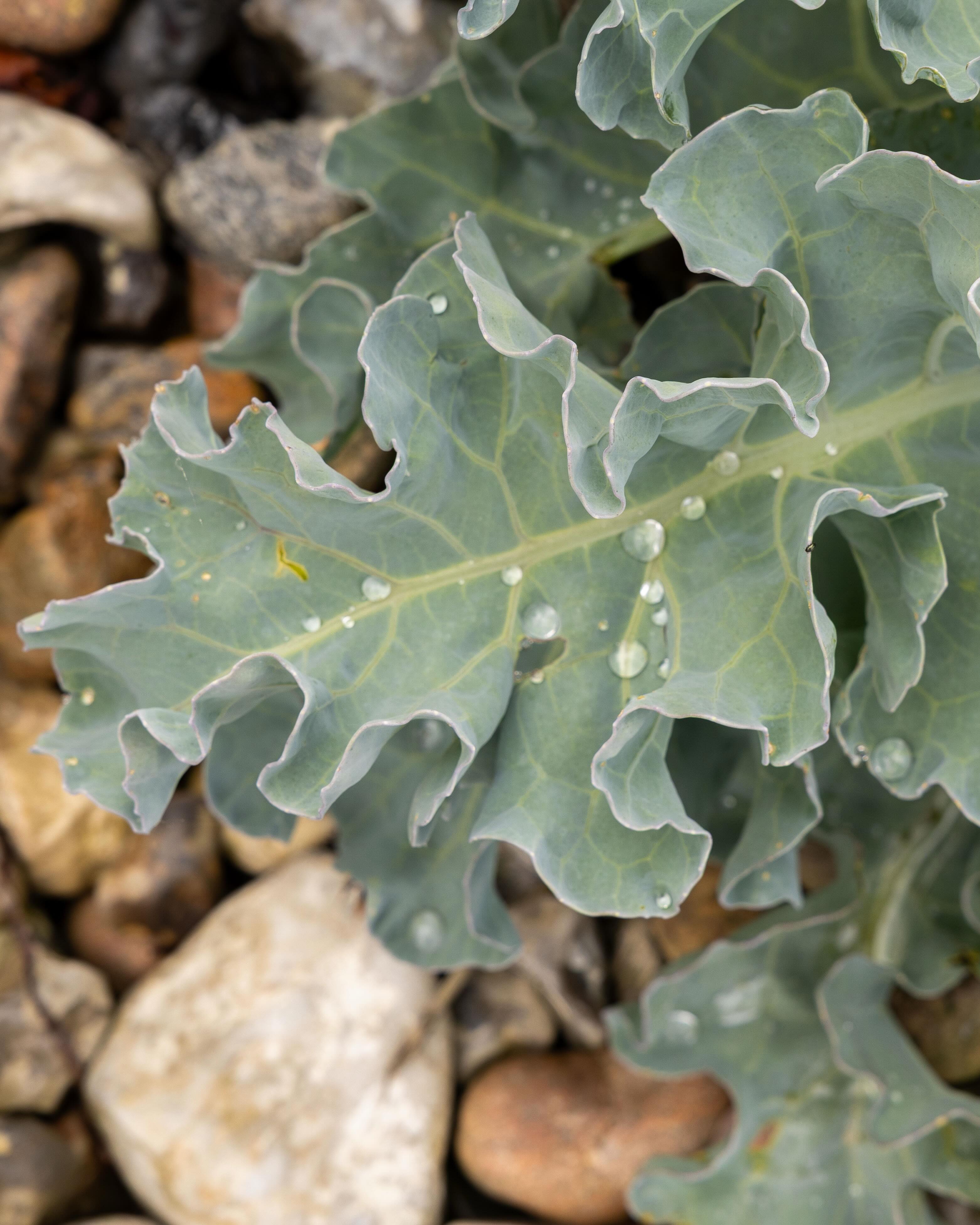
Sea kale, or Crambe maritima, is a flowering plant that naturally occurs in coastal environments.
It belongs to the Brassicaceae family, which also includes familiar plants such as cabbage, broccoli and mustard.
Unlike seaweed, sea kale grows on land.
It is associated with coastal habitats, where plants encounter conditions such as salt exposure, wind and changing weather.
Its leaves are distinctive, and its pale flowers give it an appearance that feels almost ornamental.
For skincare enthusiasts, however, the interesting part is not simply where the plant grows.
It is how selected materials derived from the plant can be investigated for cosmetic applications.
The name can be misleading.
Sea kale sounds as though it should belong beneath the ocean's surface, alongside kelp and other algae.
But botanically, it is a different kind of organism.
Seaweed is a broad term covering several groups of marine algae.
Sea kale is a terrestrial flowering plant associated with coastal environments.
This distinction matters because different organisms produce different substances.
Research involving kelp cannot automatically tell us how sea kale extract behaves.
Likewise, studies of one coastal plant cannot establish the properties of another.
In cosmetic science, the exact identity of an ingredient is more useful than the broad category used to describe it.
When you see Crambe Maritima Leaf Extract on an ingredient list, you are looking at the recognised cosmetic ingredient name for an extract derived from sea kale leaves.
The wording is quite specific.
It identifies the plant and the part of the plant used.
That is helpful because extracts prepared from different plant parts may have different compositions.
Even materials originating from the same species can vary according to how they are prepared.
This is why an ingredient list tells you something important, but not everything, about a cosmetic formulation.
It confirms the ingredient's identity without revealing the complete details of its preparation or concentration.
Leaves are biologically active structures.
They are involved in processes such as photosynthesis and contain a complex mixture of naturally occurring compounds.
Scientists can investigate plant-derived materials to understand their chemical characteristics and potential uses.
For cosmetic applications, that investigation may include laboratory assessments and studies involving formulations containing the ingredient.
The important step is connecting the research to the actual material being used.
A study of whole sea kale leaves, for example, would not necessarily establish the behaviour of a processed cosmetic extract.
Ingredient specificity helps make skincare science more meaningful.
Sea kale is particularly relevant to conversations about skin comfort.
The skin's outermost layer plays an important role in maintaining moisture and helping protect the body from everyday environmental exposure.
When skin feels dry or uncomfortable, we often focus on the familiar ingredients in moisturising products.
But cosmetic researchers also investigate less familiar botanical ingredients to understand how they may contribute to a formula's intended purpose.
Sea kale is one example.
Research involving a cosmetic ingredient derived from Crambe maritima leaves has examined skin reactivity and participants' perceptions of comfort.
In one human-use study, volunteers applied a cream containing the ingredient over a four-week period.
Researchers assessed skin responses using a stinging test, while participants also described how their skin felt.
The study reported encouraging observations relating to skin reactivity and comfort.
This kind of research is useful because it considers both an observable response and the experience of the person using the test formulation.
It also illustrates why skin comfort is an interesting subject in its own right.
Comfort can sound like a simple idea.
Yet the way skin feels is influenced by several factors.
The condition of its outer layers, moisture levels, environmental exposure and individual sensitivity can all contribute.
Two people may use similar skincare routines and describe very different experiences.
One might notice tightness after cleansing.
Another might find certain textures unpleasant.
Someone else may simply prefer the feeling of a richer moisturiser in the evening.
These differences are part of why skincare formulation is such a considered process.
It is not enough to select ingredients with interesting individual properties.
The finished product also needs to offer a texture and application experience appropriate to its intended use.
The phrase skin barrier appears everywhere in modern skincare.
It is useful terminology, but it can become confusing when every product seems to promise a dramatic transformation.
The skin barrier is not a separate layer that can simply be added or removed.
Its protective functions are associated with the structure of the skin itself, particularly the outermost layer, known as the stratum corneum.
This layer contains flattened skin cells surrounded by organised lipids.
Together, these structures help regulate water movement and provide a boundary between the body and its surroundings.
A scientific review by Proksch and colleagues describes how the skin's physical barrier depends on the organisation of cells and lipids.
This helps explain why maintaining moisture is such a central part of everyday skincare.
When the skin's outer layers contain sufficient water, they generally feel more supple and flexible.
When skin becomes dry, it may feel tight, rough or less comfortable.
A moisturising routine can help address that everyday experience.
But hydration is not the responsibility of one ingredient alone.
Different cosmetic ingredients contribute different properties.
Some attract water.
Some help soften the skin's surface.
Others help limit moisture loss.
A well-considered moisturising formula brings these functions together.
Understanding the skin barrier is useful.
Assuming that every unfamiliar ingredient can repair it is not.
A cosmetic ingredient may have interesting laboratory findings or encouraging results in a particular study.
That does not mean every product containing it has demonstrated the same outcome.
The better approach is to appreciate ingredient research for what it reveals, while also considering the complete formulation.
This is especially important when discussing newer botanical and biotechnology-derived ingredients.
Their scientific stories deserve attention without needing exaggerated promises.
A formula containing sea kale extract may also include ingredients that have been used in skincare for decades.
Glycerin is a good example.
It is a humectant, meaning it helps attract and retain water.
Scientific research has examined glycerin's relationship with skin hydration and other aspects of skin physiology.
Sodium Hyaluronate, a hyaluronic acid ingredient, is another familiar component of hydration-focused skincare.
These ingredients have recognisable roles.
Sea kale extract belongs to a different part of the formulation conversation.
It is a botanical ingredient selected for its particular characteristics and the research associated with the material.
Rather than treating ingredients as competitors, it is more useful to understand how formulators combine them.
Skincare marketing sometimes encourages us to think in rankings.
Which ingredient is strongest?
Which is newest?
Which one should replace everything we used before?
But ingredients do not need to compete to be valuable.
A moisturising formula can include familiar humectants, emollients and selected botanical extracts for different reasons.
One ingredient may contribute to the way the product holds water.
Another may help create a soft, smooth finish.
Another may be included because of research exploring a particular cosmetic application.
The finished texture and experience emerge from the formula as a whole.
This is why a beautifully considered product often has more in common with careful composition than with a collection of fashionable ingredients.
Sea kale is best described as a coastal botanical.
It should not be labelled as an alga simply because its common name contains the word sea.
Marine biotechnology is a broader field involving biological materials and systems associated with marine environments.
Some skincare ingredients are derived from microalgae.
Others come from seaweed.
Still others, such as sea kale, are associated with coastal plants.
These distinctions make the ingredient story more interesting, not less.
They remind us that nature offers a remarkable diversity of biological materials.
Modern cosmetic science allows researchers to investigate those materials with increasing precision.
Consider two ingredients that might appear in a marine-inspired skincare formula.
One is Haematococcus Pluvialis Extract, derived from a microalga.
Another is Crambe Maritima Leaf Extract, derived from a flowering plant.
Both can be discussed within a wider story of nature-inspired cosmetic innovation.
But they are not interchangeable.
Their origins, compositions and supporting research are different.
Understanding that distinction helps consumers read ingredient lists with greater confidence.
It also encourages brands to explain ingredients clearly rather than relying on broad, romantic descriptions.
Learning about ingredients is enjoyable, but it should also make everyday choices easier.
You do not need to become a cosmetic chemist to build a thoughtful routine.
Start with how you want your skin to feel.
Perhaps you prefer lightweight hydration in the morning.
Perhaps you enjoy a richer cream at night.
Maybe your skin feels different during humid weather than it does after a day in air conditioning.
These preferences can guide your product choices.
A lightweight serum and a rich moisturiser can offer very different experiences.
A serum may feel refreshing and easy to layer.
A cream may leave a more substantial, comforting finish.
Neither is automatically better.
The most useful choice is the one that suits your preferences and works comfortably within your routine.
More products do not necessarily create a better experience.
If you are introducing unfamiliar skincare, consider doing so gradually.
This makes it easier to notice how your skin responds.
Avoid unnecessary friction during cleansing and application.
And remember that daily sun protection remains important in Australia, regardless of which moisturising ingredients you choose.
A simple routine can still be a sophisticated one.
Skin comfort can change.
Weather, cleansing habits and other products may influence how your skin feels from one day to the next.
If a product causes significant or persistent discomfort, stop using it and seek appropriate professional advice.
Fragrance-free formulations can be a thoughtful choice, but no ingredient list guarantees universal tolerance.
Your own experience remains important.
At Mi’Ora, we are interested in the relationship between thoughtful formulation and the experience of everyday care.
Our two launch products bring together familiar moisturising ingredients with selected botanical and biotechnology-derived materials.
Hydra Bloom Hyaluronic Acid Serum is designed as a lightweight, hydration-focused step.
Its formulation includes Glycerin, Sodium Hyaluronate and Crambe Maritima Leaf Extract, alongside other carefully selected ingredients.
The Pause Moisturiser offers a richer, comforting cream experience.
Its formulation includes Glycerin, jojoba-derived ingredients, sunflower seed oil and Crambe Maritima Leaf Extract.
Both products are fragrance-free and reflect our preference for considered, uncomplicated skincare.
We believe ingredient education should make skincare feel more approachable.
Understanding what is in a formula can be empowering, particularly when unfamiliar names begin to make sense.
Sea kale is a lovely example.
Its botanical identity is distinctive.
Its cosmetic research offers an interesting perspective on skin comfort.
And its place within a broader formulation illustrates how familiar and less familiar ingredients can sit alongside one another.
No. Sea kale is a coastal flowering plant. Seaweed refers to groups of algae. Their botanical identities and compositions are different.
It is a cosmetic botanical ingredient. Research involving a particular sea kale ingredient has explored skin reactivity and comfort in a test formulation.
There is no sound basis for a general superiority claim. They are different ingredients, and their roles and supporting research should be considered separately.
A serum can generally be followed by a moisturiser when both products suit your skin. The complete formulations and your individual preferences matter more than the presence of sea kale alone.
An ingredient's presence does not guarantee how an individual will respond. If you have a history of reactions, review the full ingredient list and seek professional advice when appropriate.
Sometimes the most interesting part of skincare is discovering that an unfamiliar ingredient has a story worth understanding.
Sea kale is more than a beautiful name.
It is a coastal flowering plant whose leaf extract has attracted attention in cosmetic research exploring skin comfort.
Its story also reminds us that good skincare is not about choosing the most unusual ingredient.
It is about thoughtful formulation, clear information and products that fit comfortably into everyday life.
There is no need to chase every new discovery.
A little curiosity, a little consistency and a moment of care can be enough.
Pause. Breathe. Glow.
The pause your skin deserves